
Open Streets Corvallis features a different neighborhood route and demonstration project each year. The goal of the demonstration project is to build temporary features to educate the public about infrastructure that re-imagines our streets as places where people want to walk, bike and play.
In the past, some demonstration projects have been based on potential future projects included in the City of Corvallis Transportation System Plan (TSP) and Active Transportation Toolkit. However, the primary goal of the demonstration is to educate and does not indicate that the project will become permanent.
Past Projects
Open Streets 2025 – Lilly Park to Willamette Park
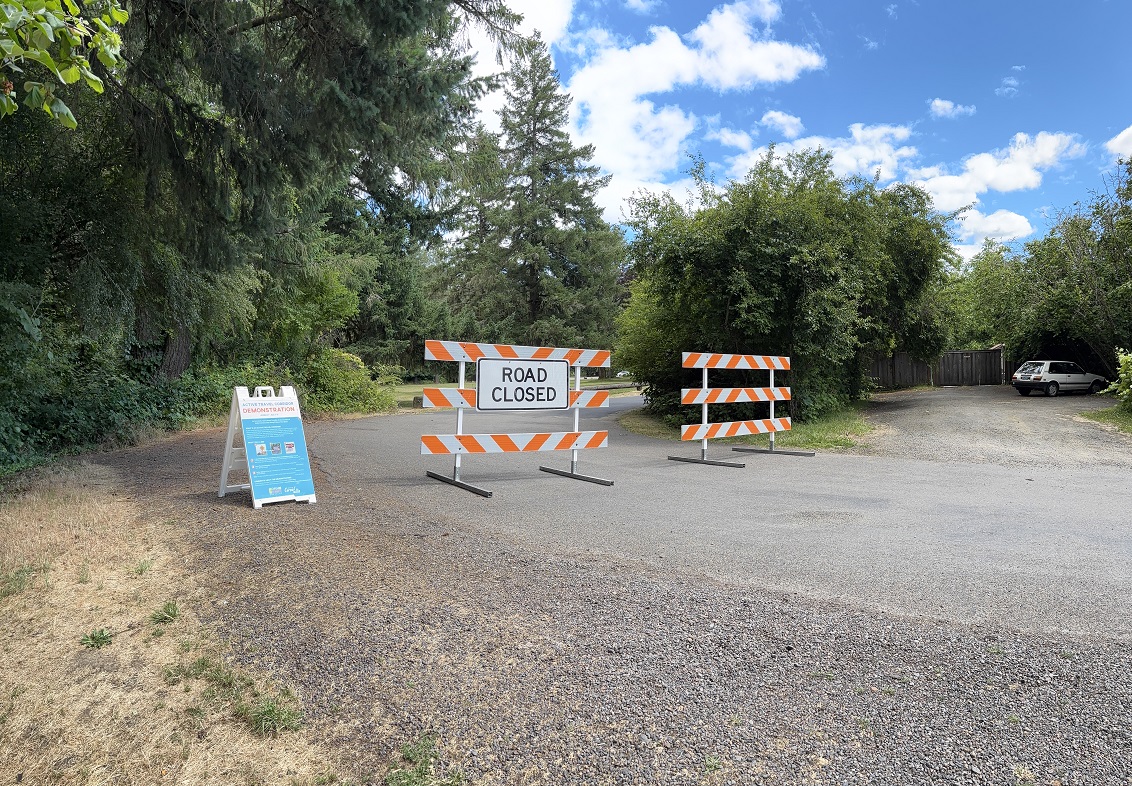
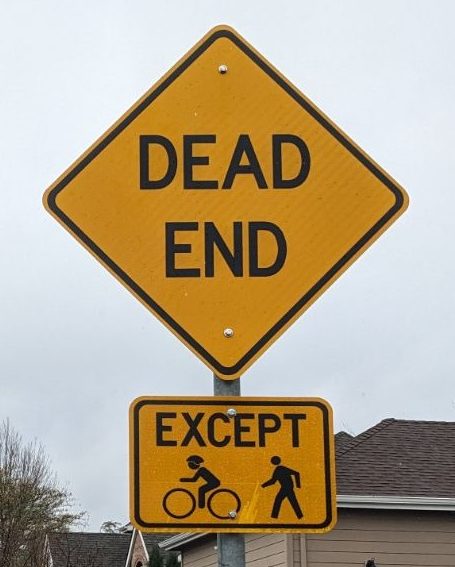
In 2025, an Active Travel Corridor (ATC) was demonstrated along SE Heron View Street, adjacent to Willamette Park. The street was closed to vehicles for two weeks, but remained open for people walking, biking, and rolling. Along with the street closure, our new ATC signage (“except bikes and peds” plaque) was displayed in advance of the closure.
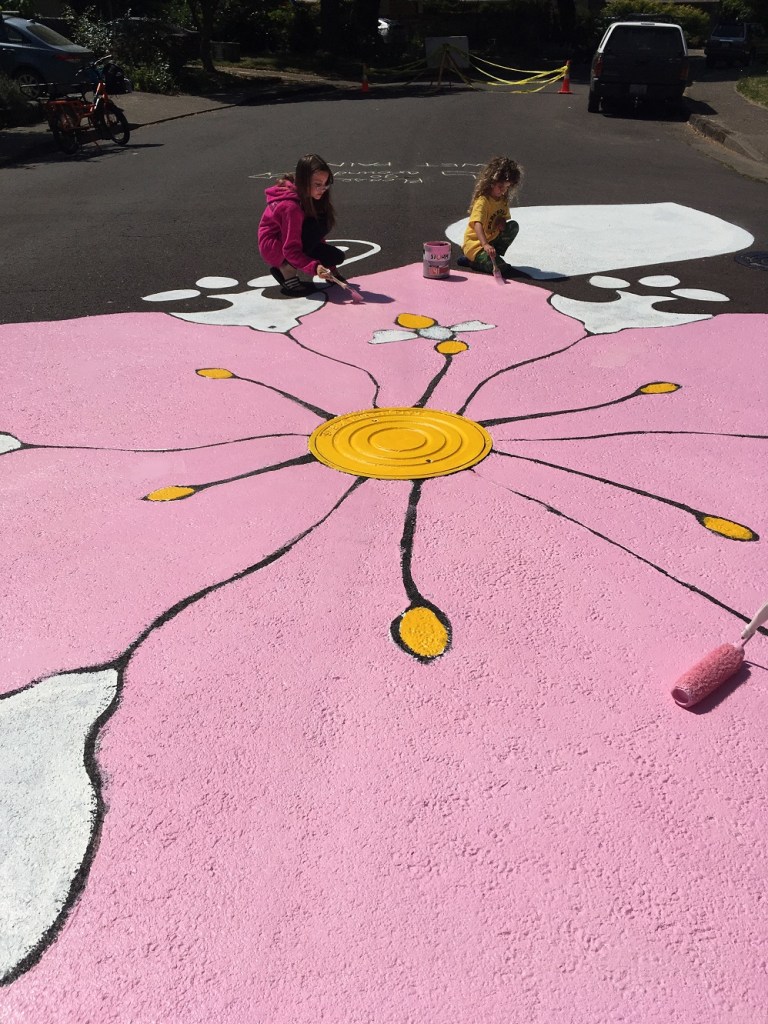
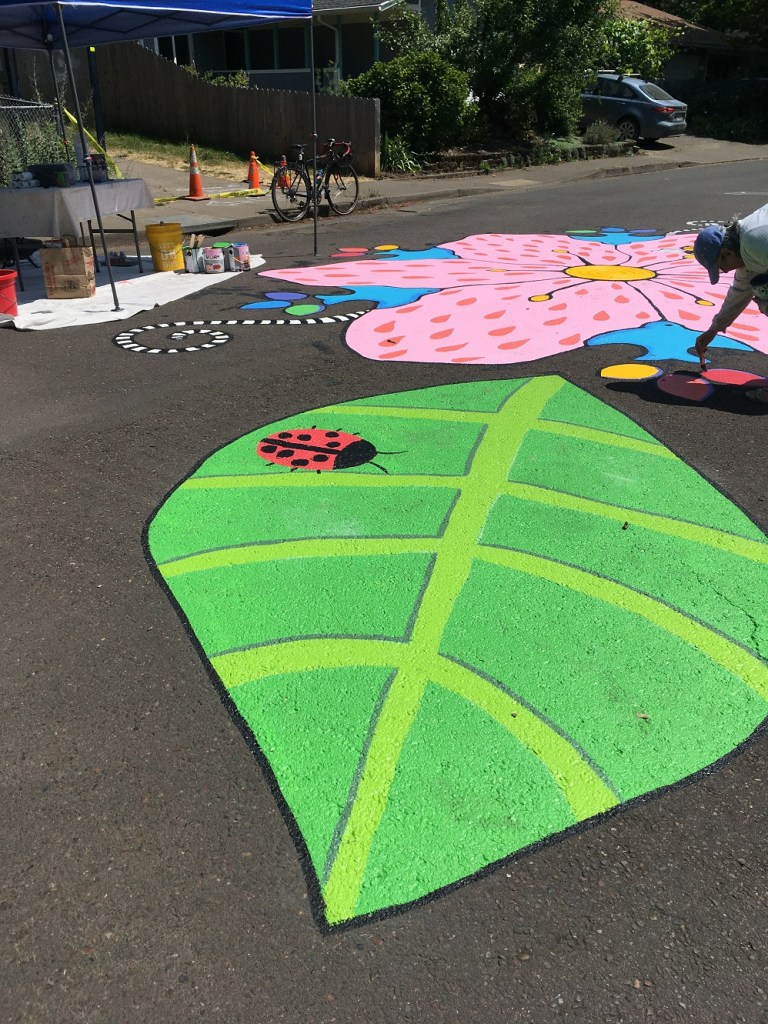
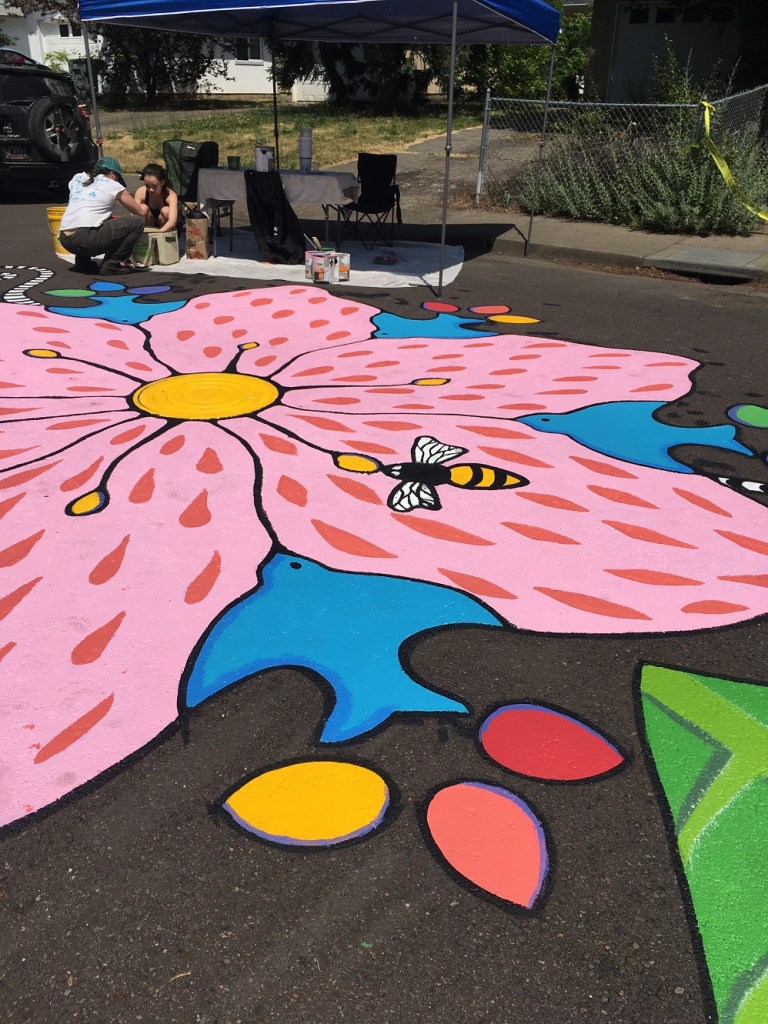
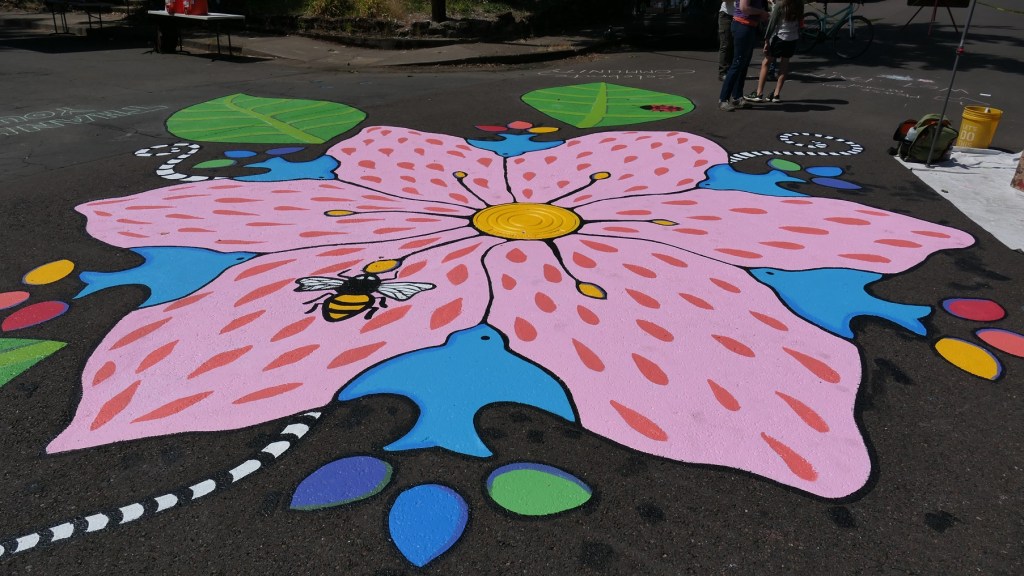
The neighborhood repainted the intersection mural adjacent to Lilly Park (SE Bethel Street and Lilly Avenue).
Open Streets 2024 – Cloverland Park to Garfield Park
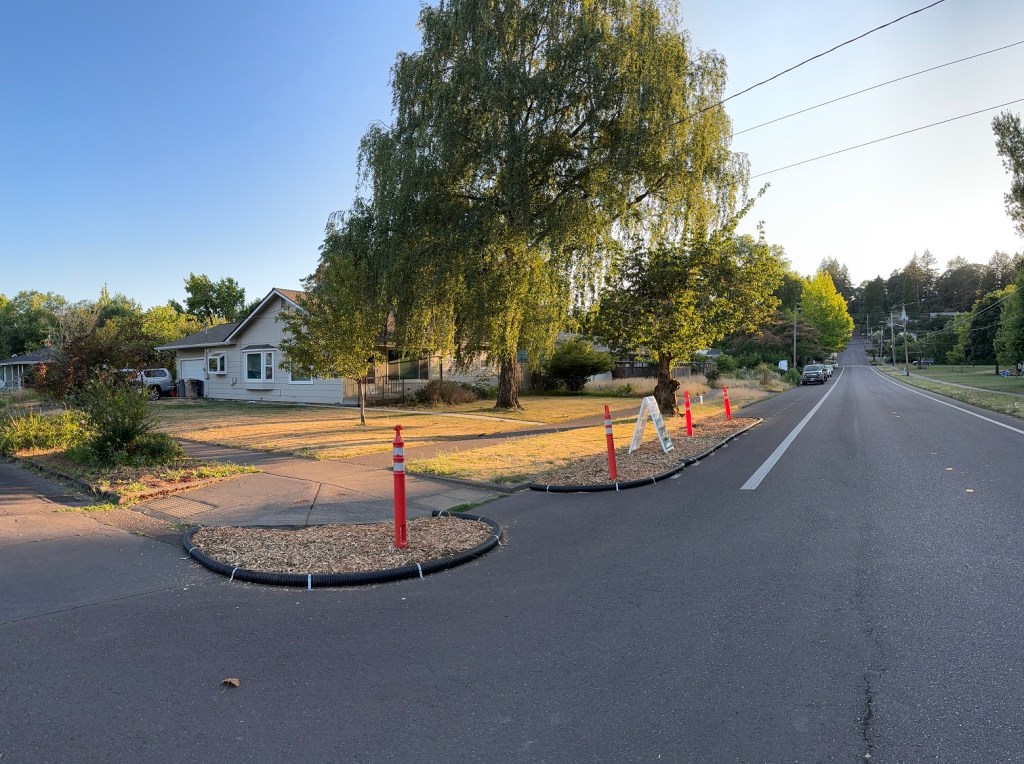
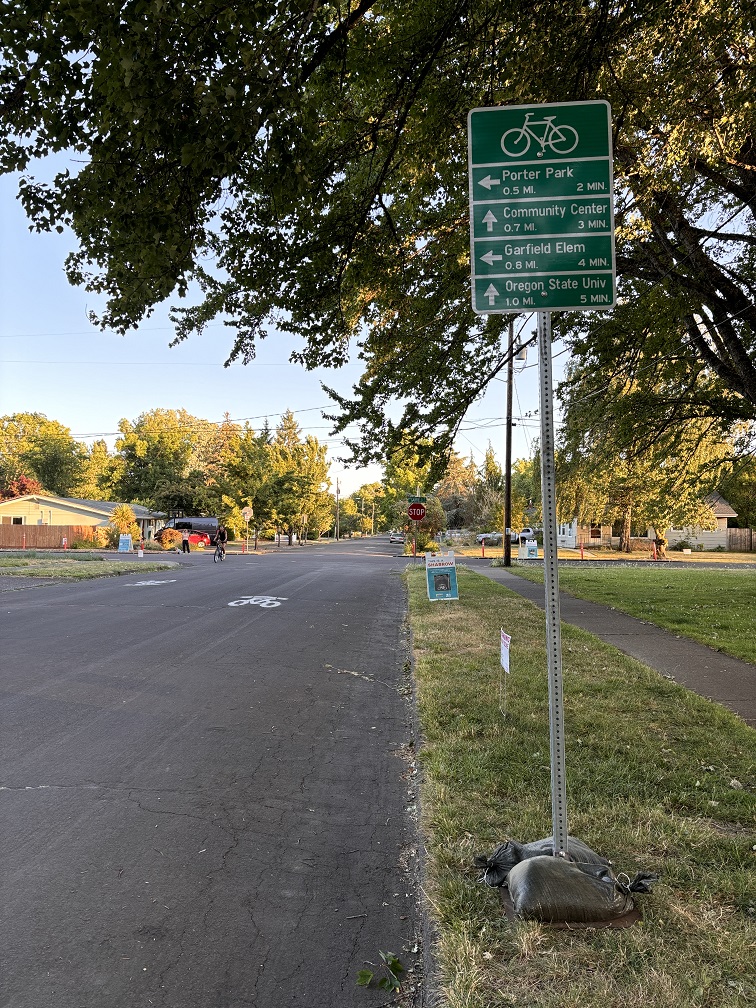
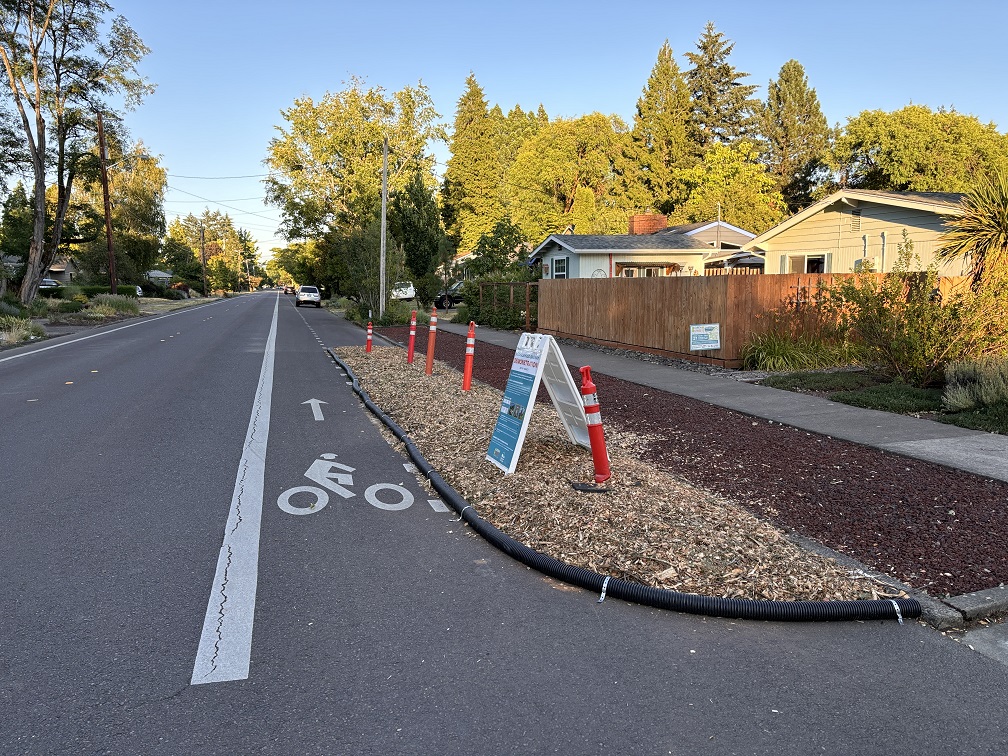
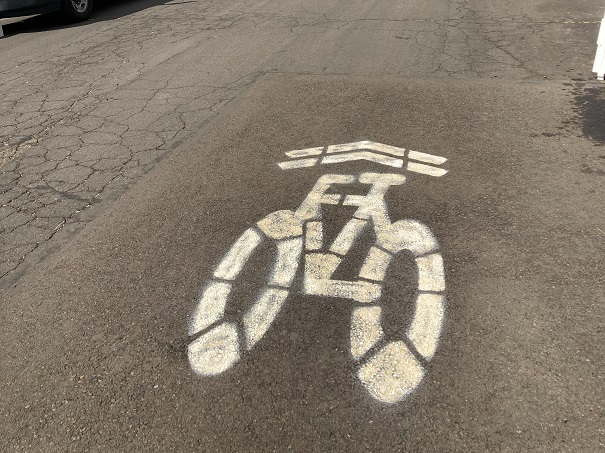
In 2024, Neighborhood Bikeway features were showcased at NW 27th Street and Garfield Avenue. Temporary curb extensions shortened the crossing distance and provided a waiting space for people crossing Garfield Avenue as well as promoted slower vehicle turning movements. Bicycle guide signage and shared lane markings (sharrows) gave direction to people riding bicycles.

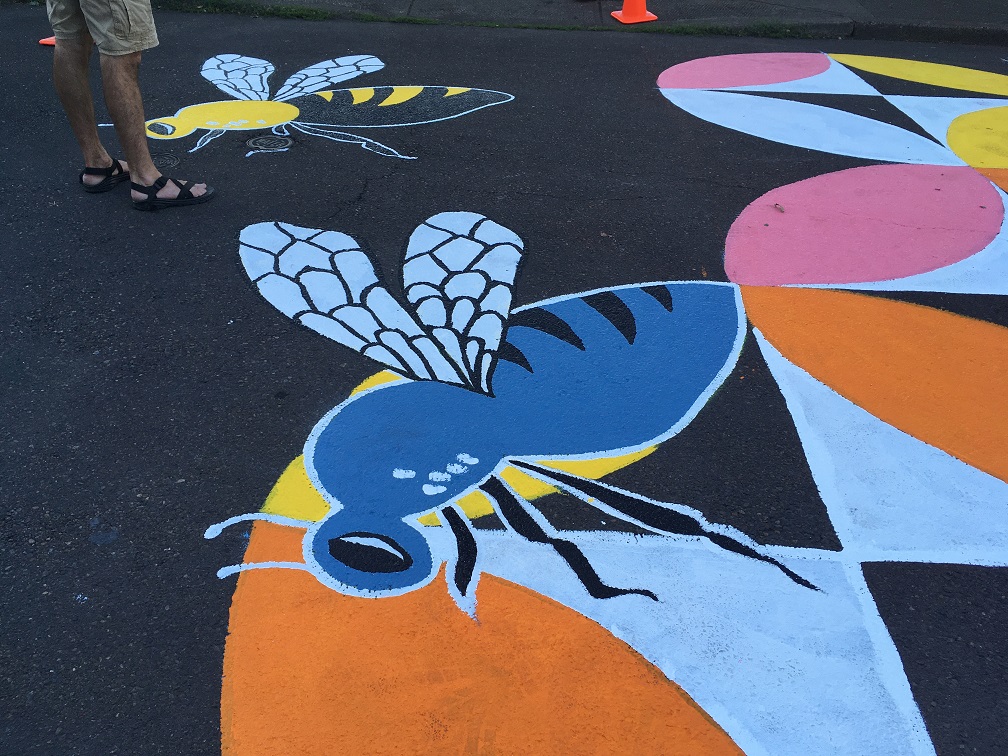
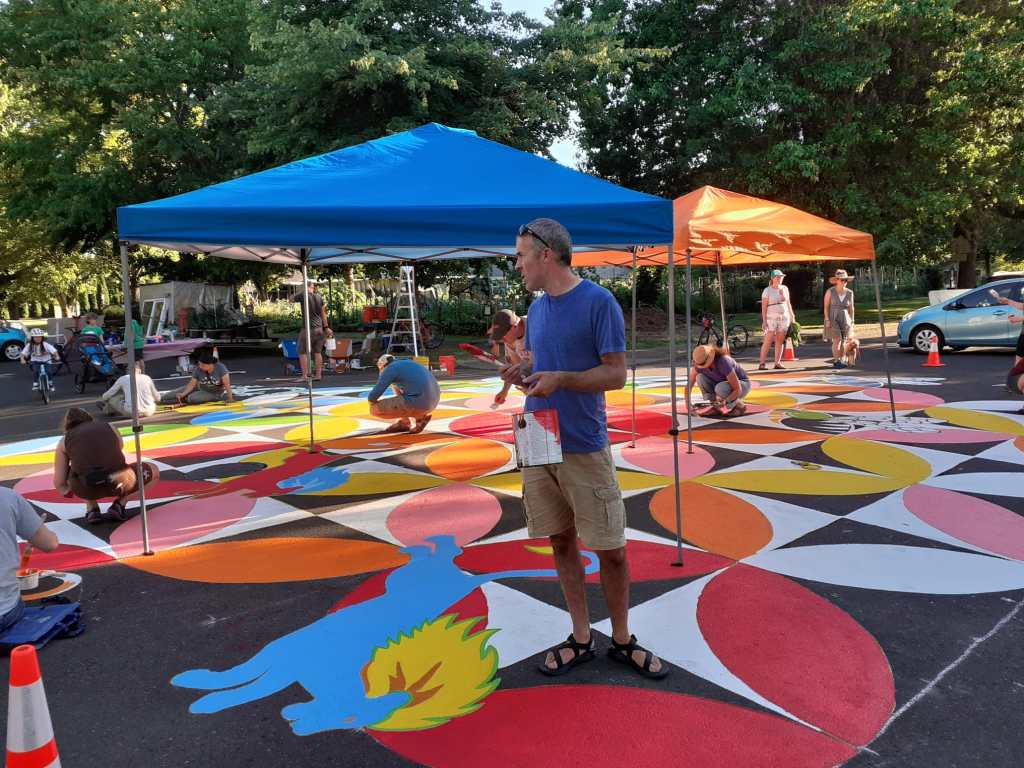
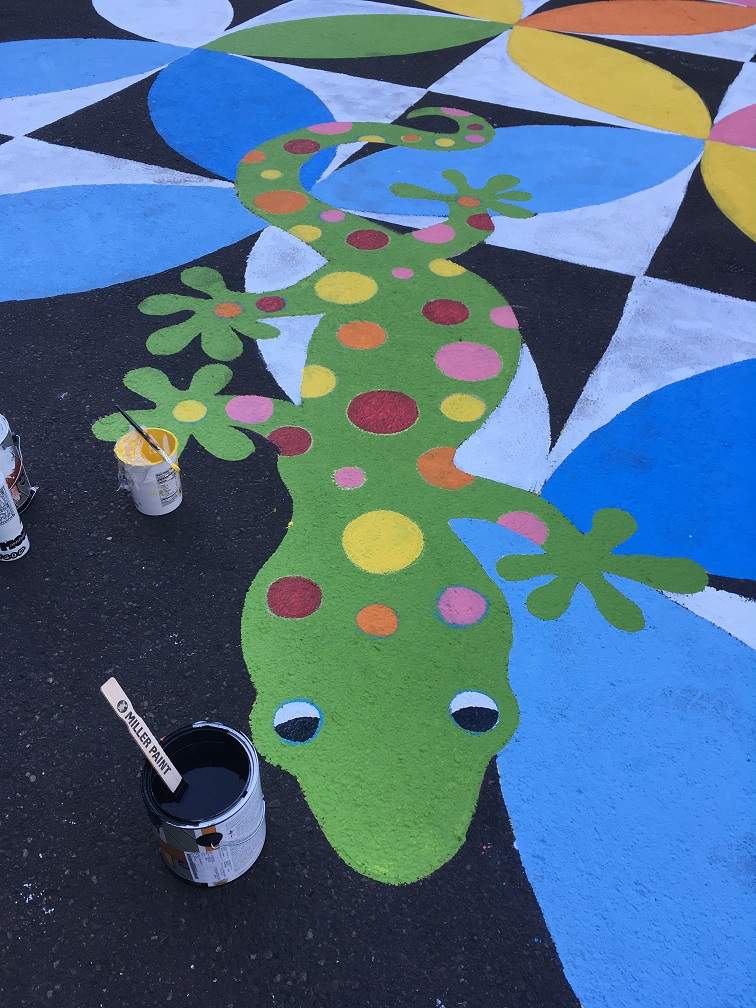
The neighborhood painted an intersection mural entitled “Peace by Piece” adjacent to Garfield Park (NW Dixon Street & Cleveland Avenue).

Open Streets 2023 – Central Park to Peanut Park
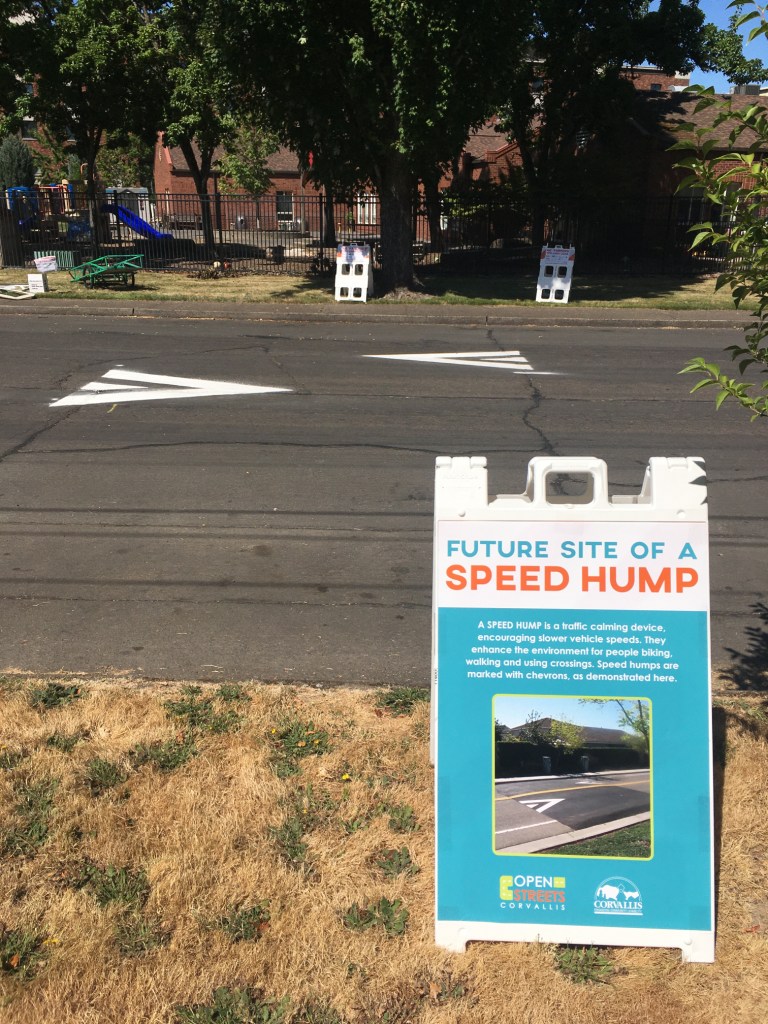
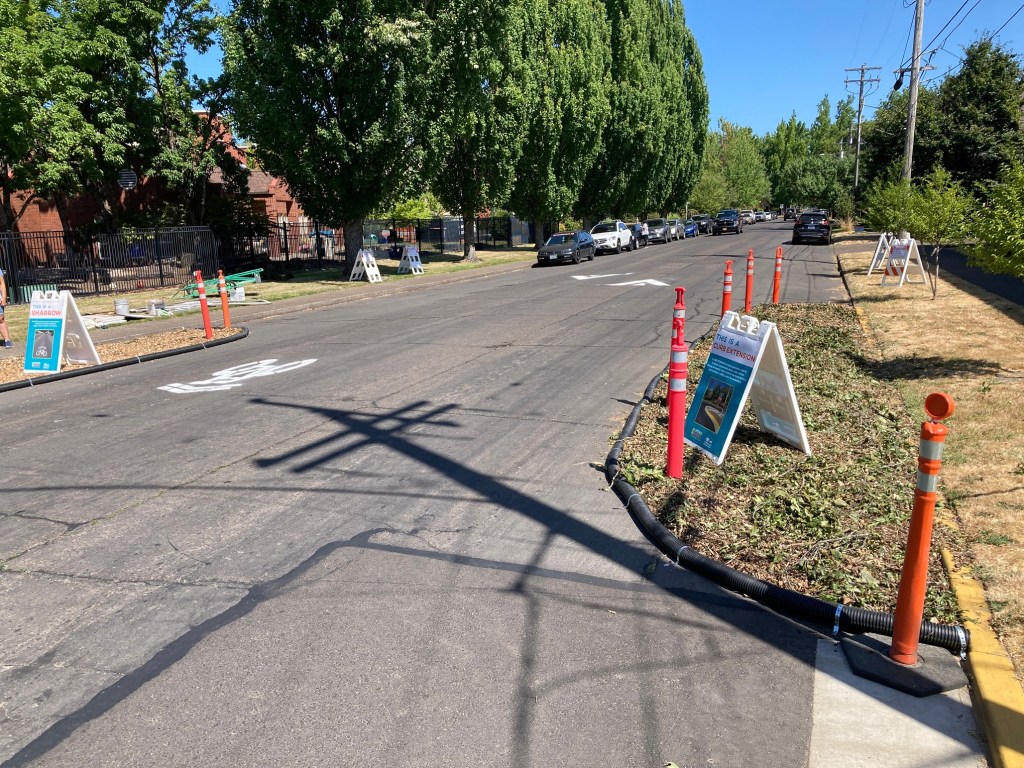
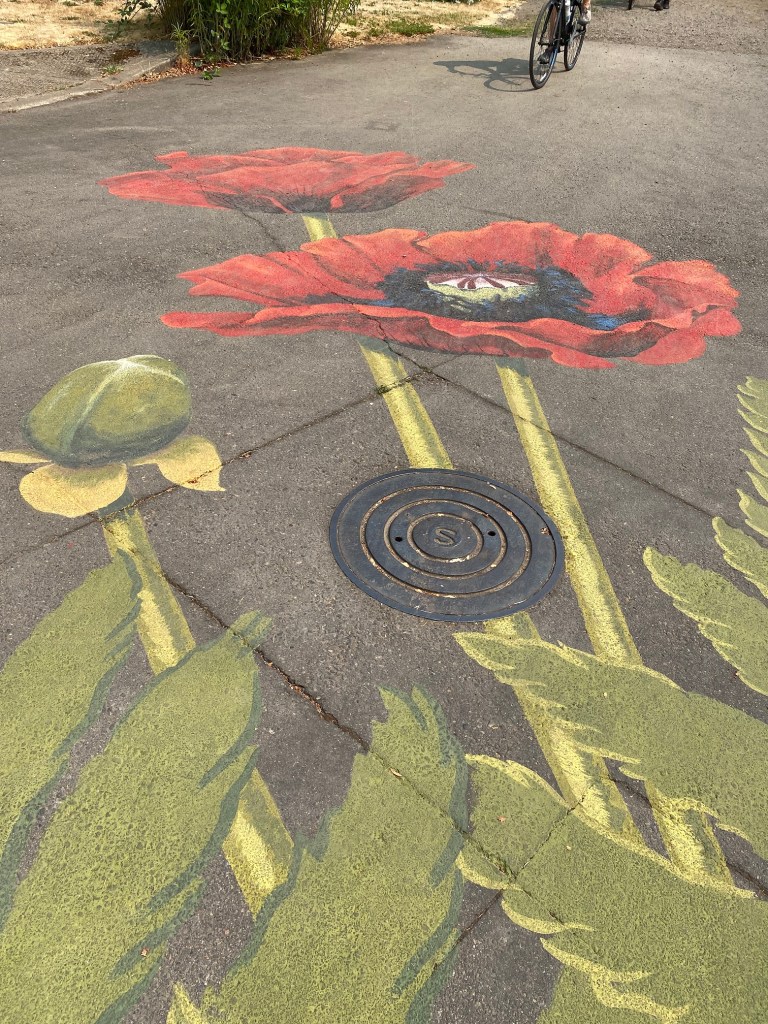
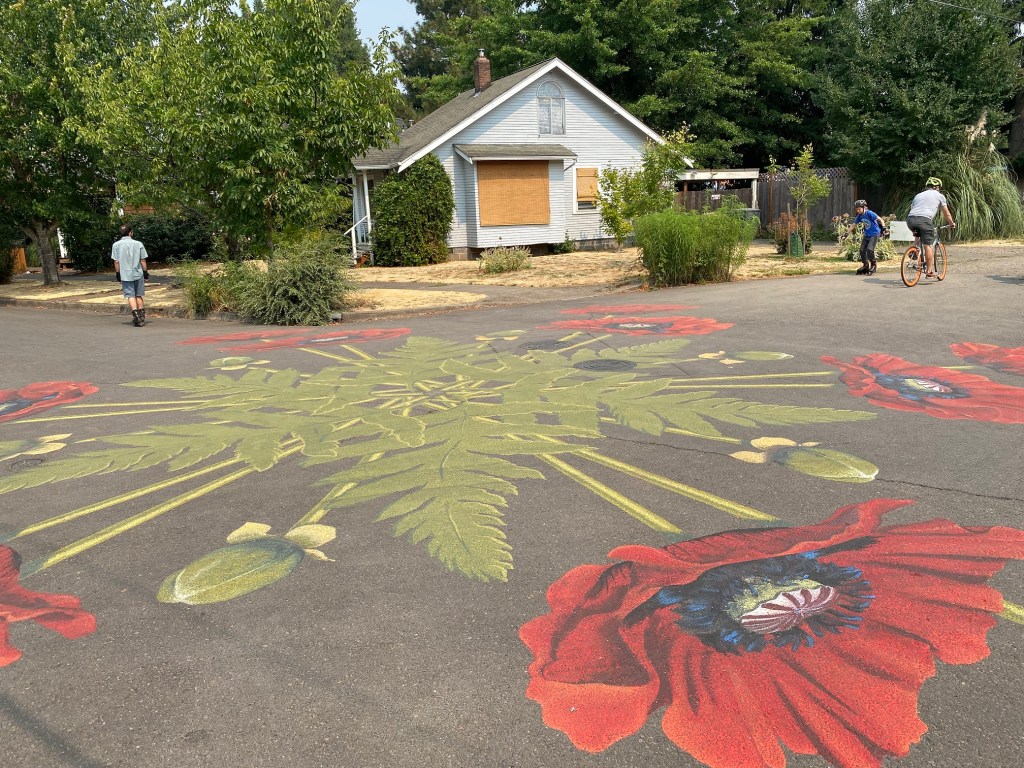
In 2023, part of the route traveled along SW 11th Street, a future Neighborhood Bikeway. Temporary curb extensions on the northwest and northeast corners of 11th Street and Washington Avenue provided traffic calming, narrowing the street. Additionally, chalked chevrons marked the future site of a speed bump, to be installed as part of the Neighborhood Bikeway. At the entrance to Peanut Park (SW 10th Street & D Avenue), the neighborhood painted an intersection mural of poppies.
Open Streets 2022 – Arnold Park to Chintimini Park
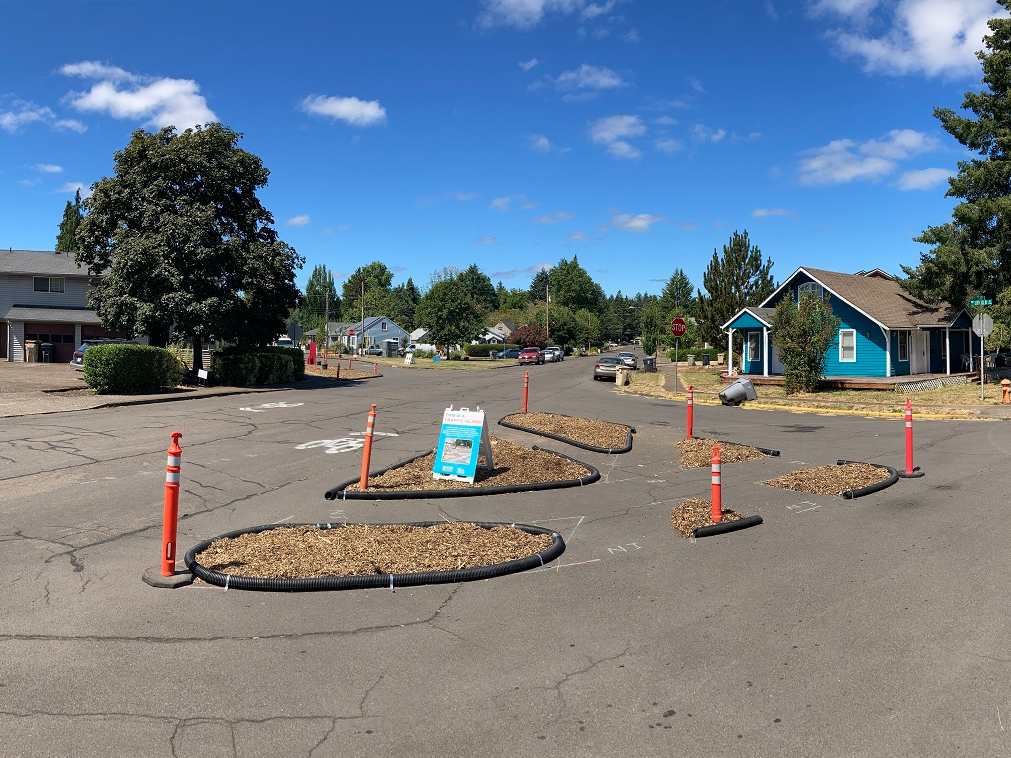
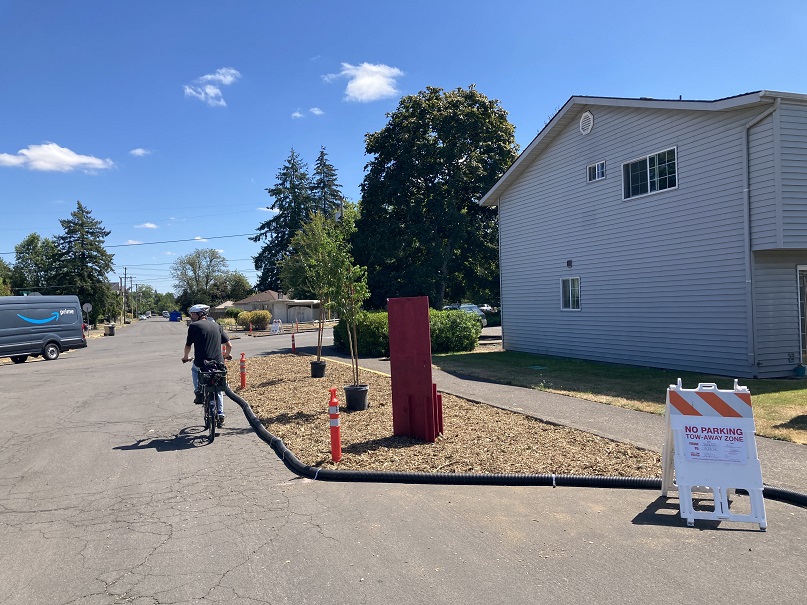
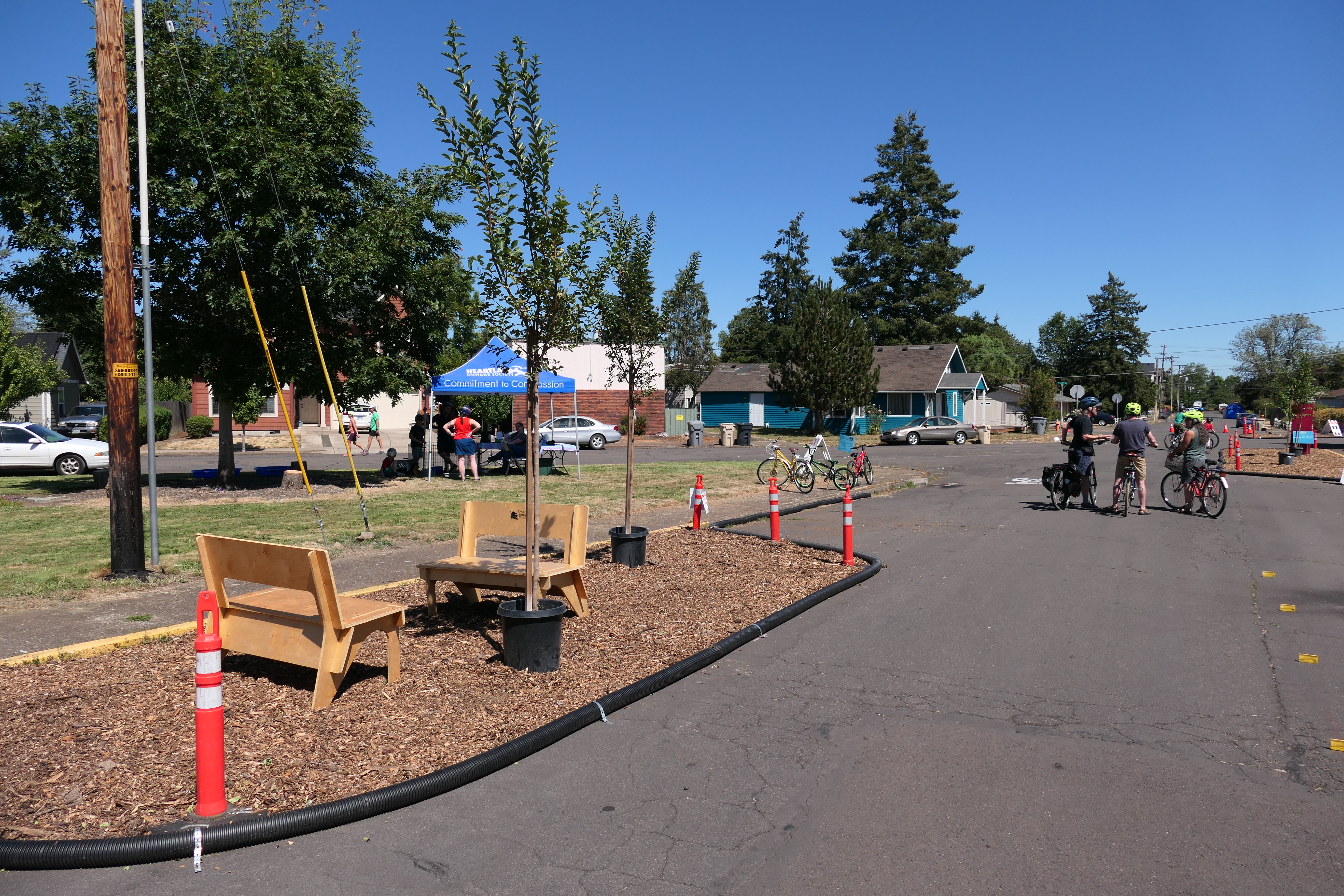
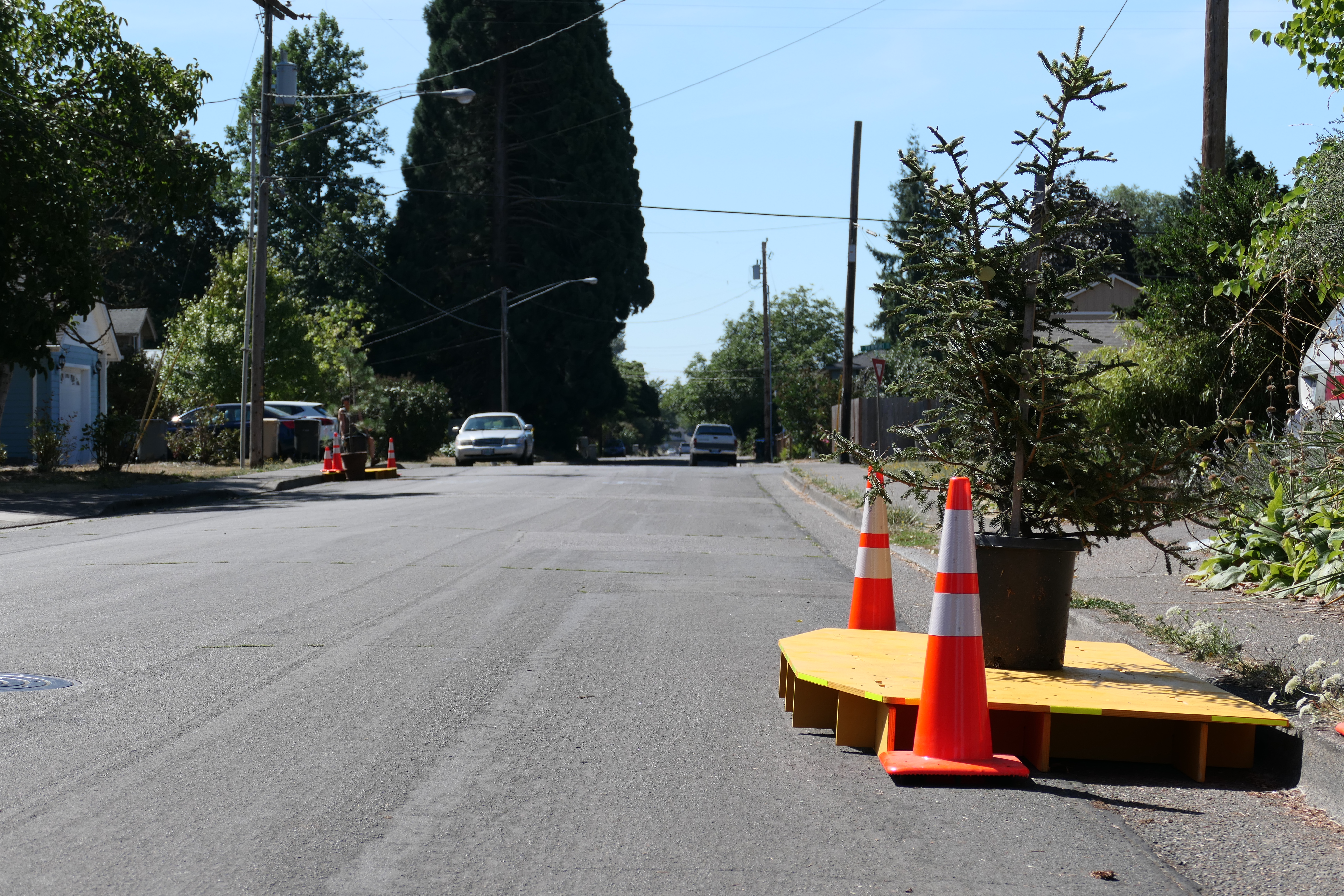
In 2022, Neighborhood Bikeway features were showcased along portions of Lincoln Avenue and Coolidge Way. Three chicanes extended the curb in an alternating pattern that visually narrowed the street, encouraging lower vehicle speeds along Lincoln. A traffic island shortened the travel distance and provided a refuge for those crossing the six-way intersection of Coolidge Way, Lincoln Avenue and 26th Street. The demonstration stayed up for two weeks after the event.
Open Streets 2019 – Lilly Park to Tunison Park (Southtown)
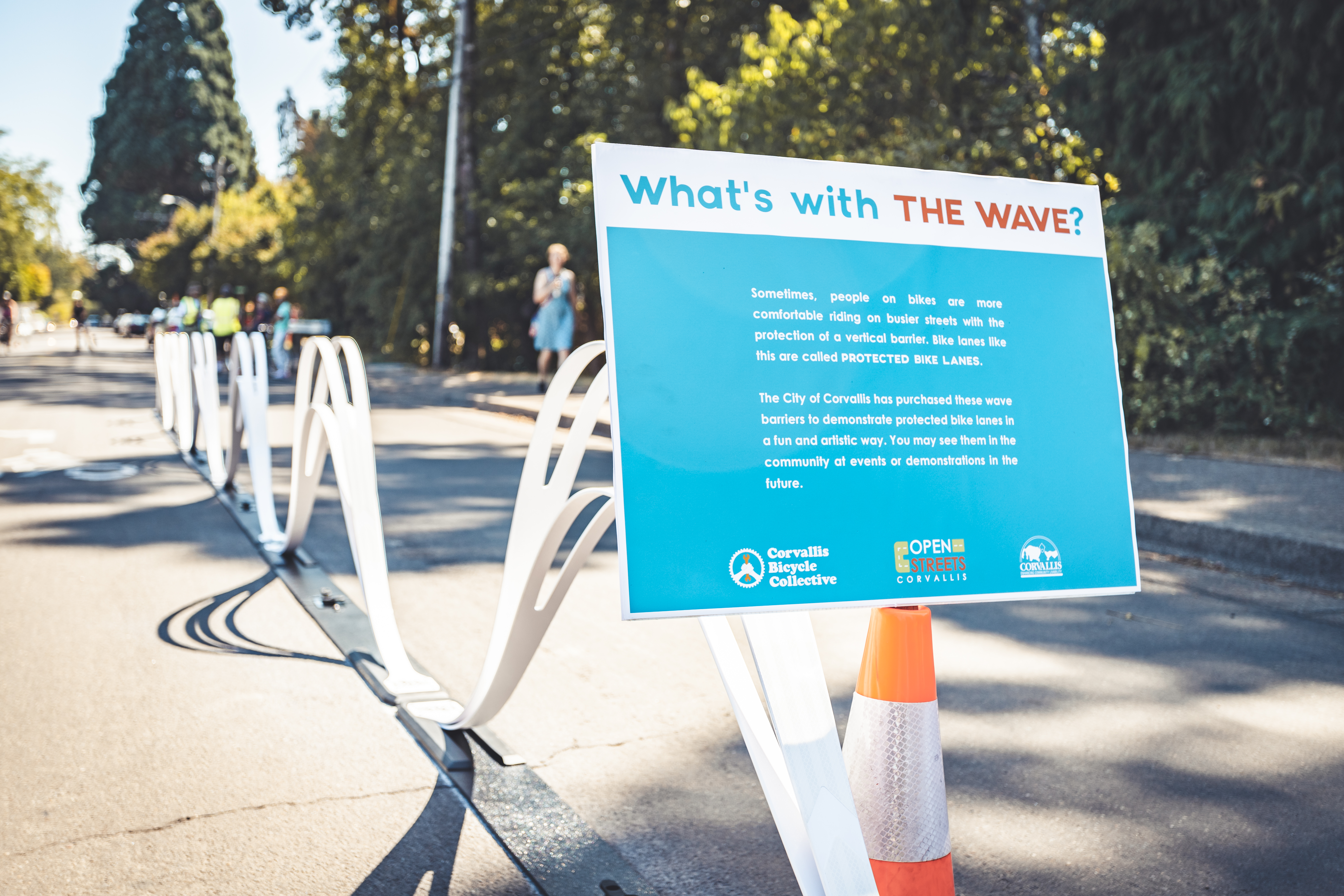
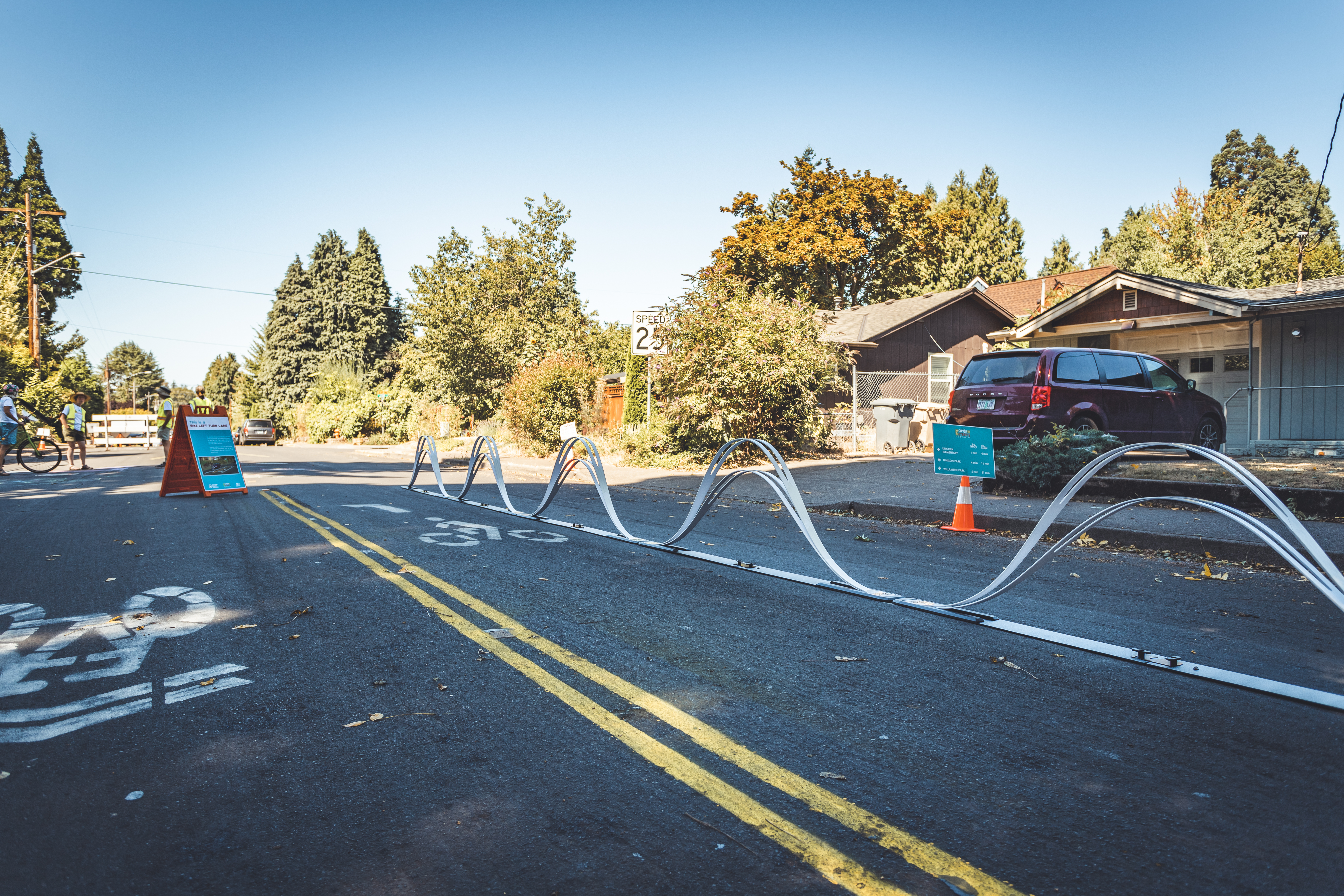
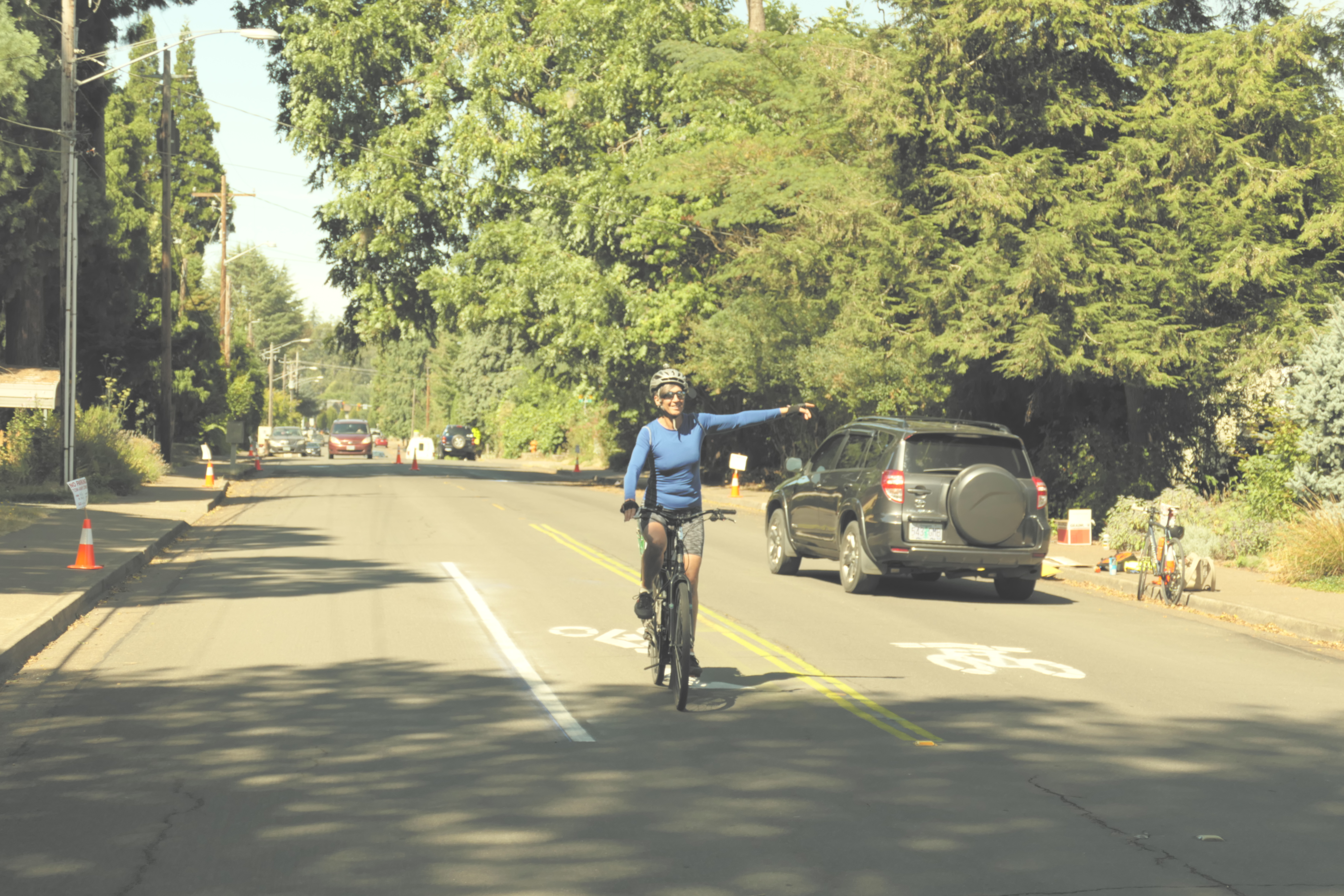
In 2019, the Southtown Neighborhood Bikeway traveled briefly along Alexander Avenue, where Bethel Street and Thompson Street are offset. A center left turn bike lane on Alexander helped people on bikes to turn left comfortably and avoid conflicts with drivers. Temporary chalk paint was used on Alexander to define the bike lane. During the demonstration, there was no on-street parking along this stretch Alexander Avenue.
Open Streets 2018 – Cloverland Park to Harding Center
In 2018, Open Streets re-imagined accessibility and safety for pedestrians and bicyclists at the five-way intersection of Coolidge, 29th & Grant. A temporary street demonstration was in place for 10 days. On event day, First Alternative Co-op hosted a mini-festival in the street and tiny park adjacent to the installation.

Open Streets 2017 – Garfield Park to Franklin Square Park
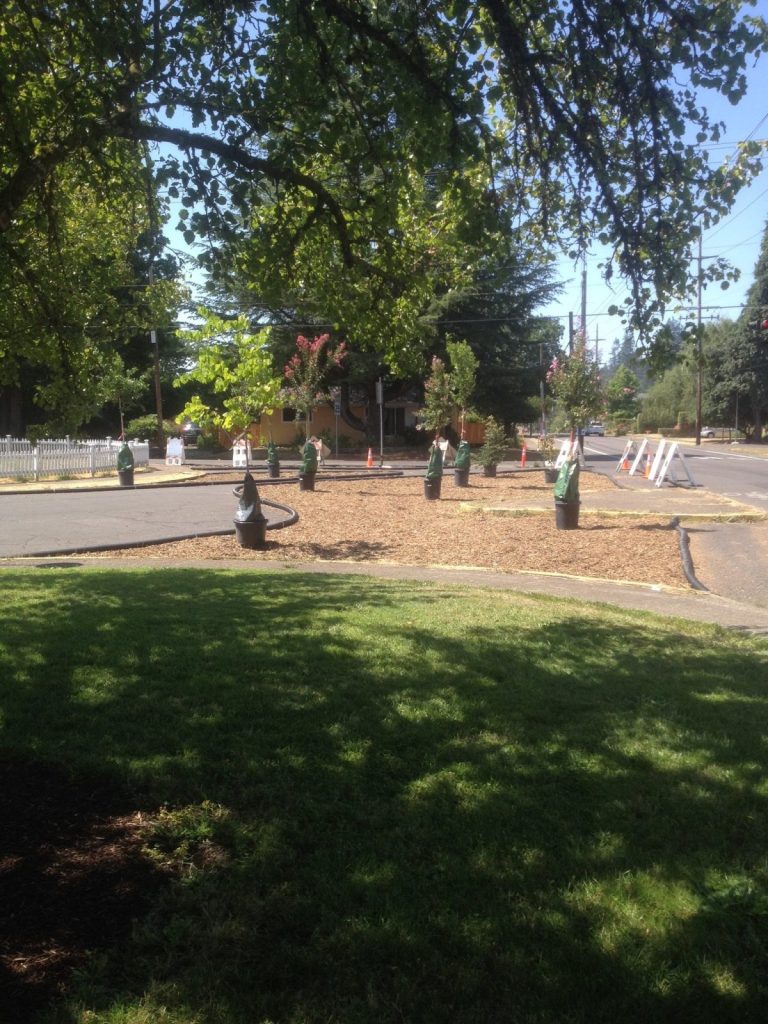
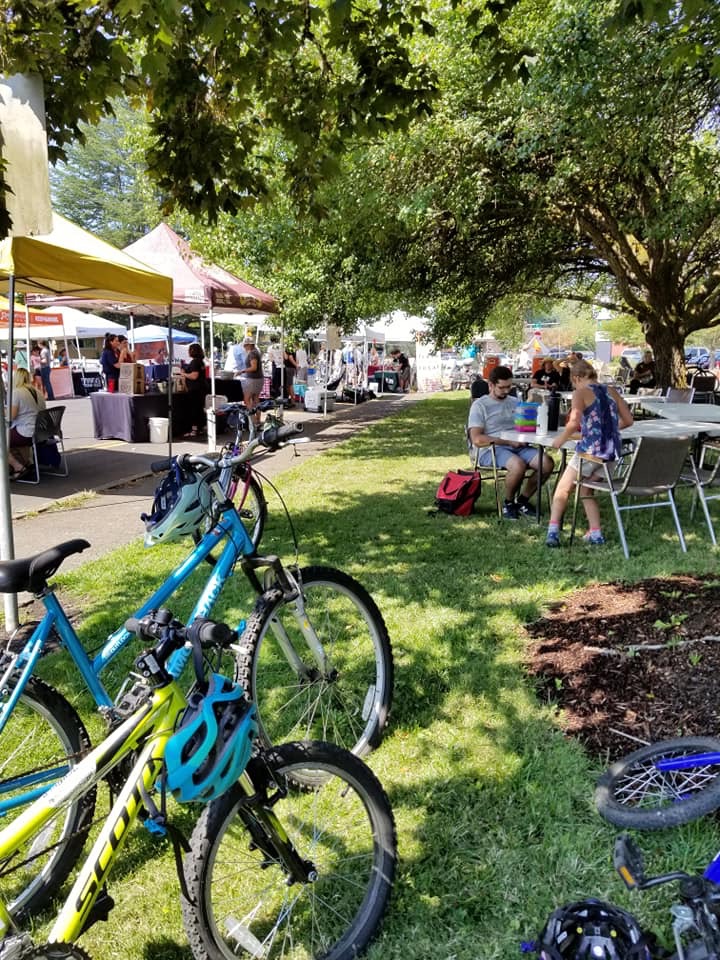
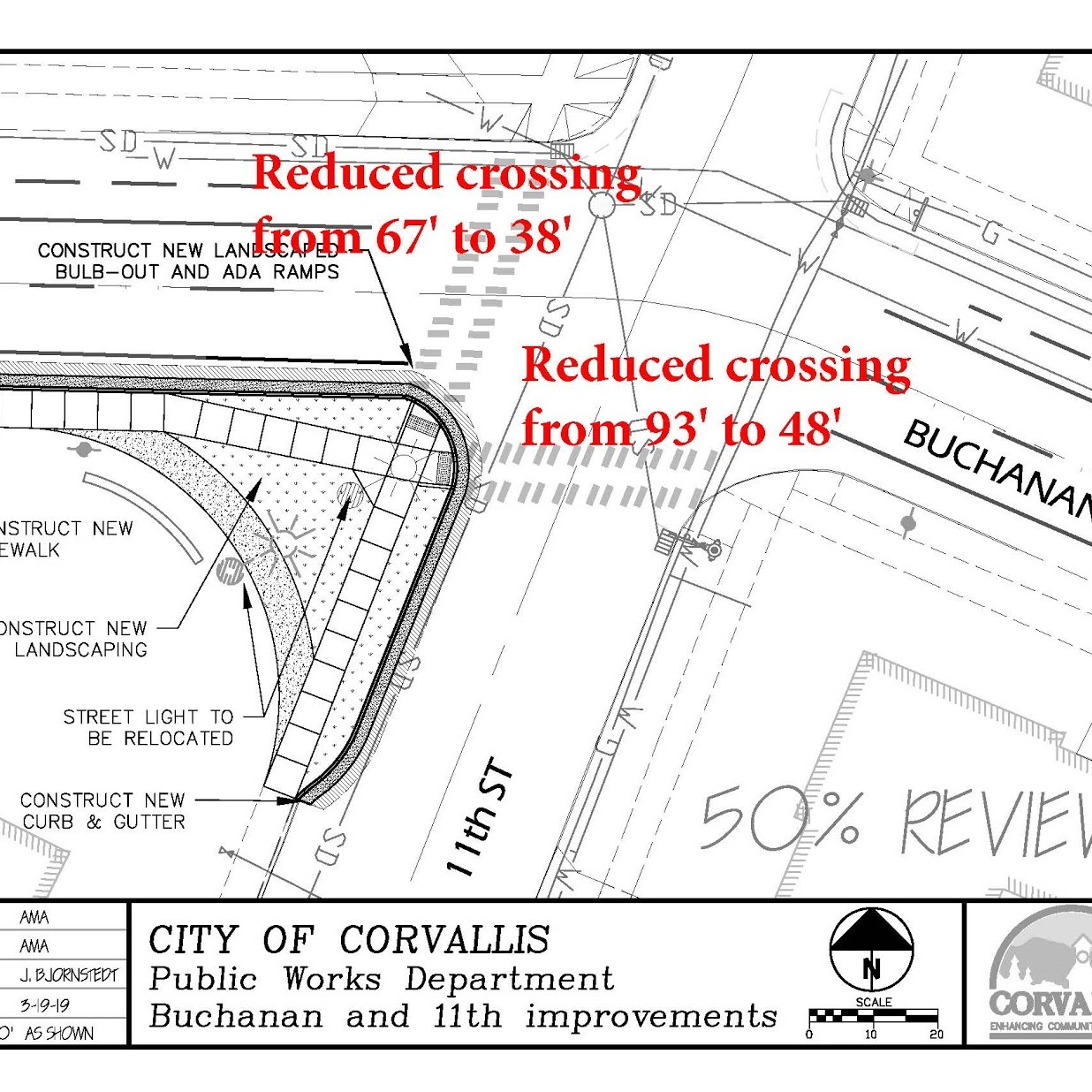
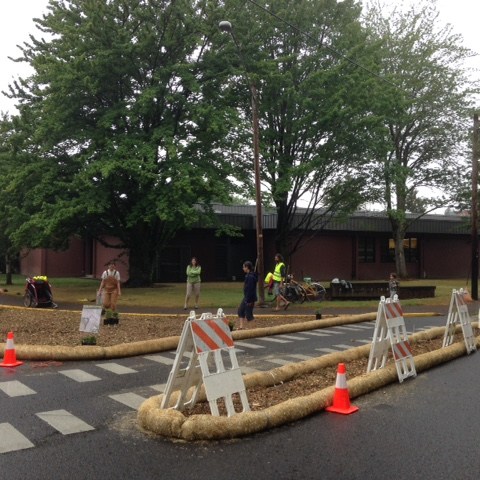
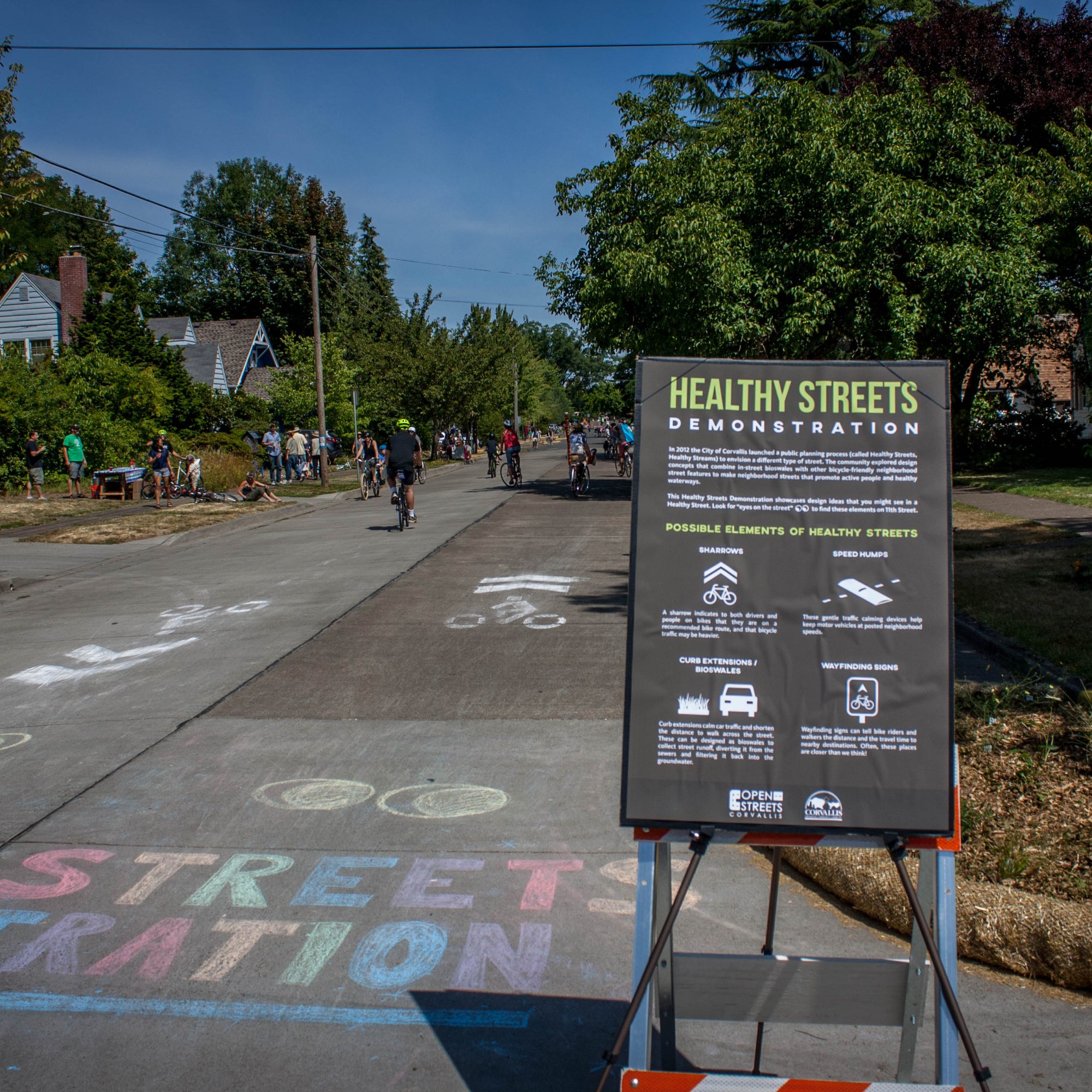
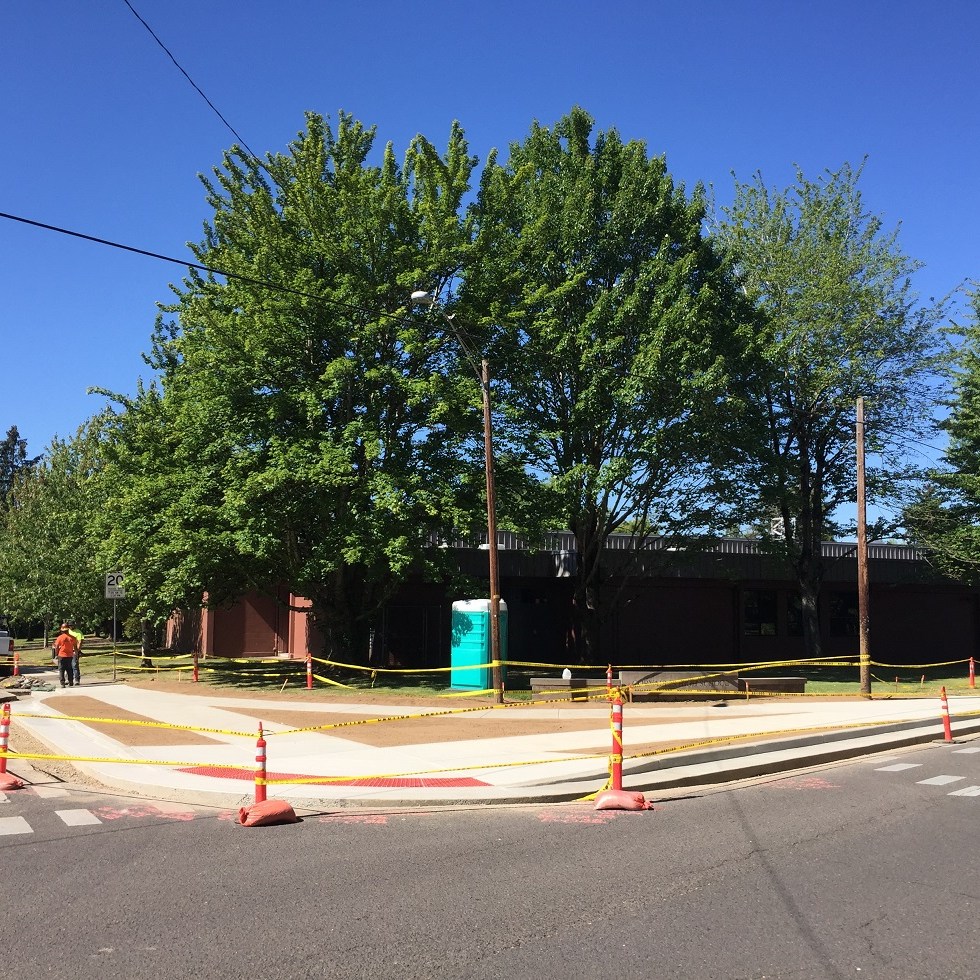
In 2017, 11th Street was chosen as a demonstration site because of its residential character, connections to three public schools and Oregon State University, and proximity to Dixon Creek. The Open Streets demonstration included temporary bulb-outs at the intersection of 11th Street and Buchanan Avenue designed to reduce crossing distance and slow vehicles making right turns. In summer 2020, the intersection received a permanent redesign, based on the demonstration project.
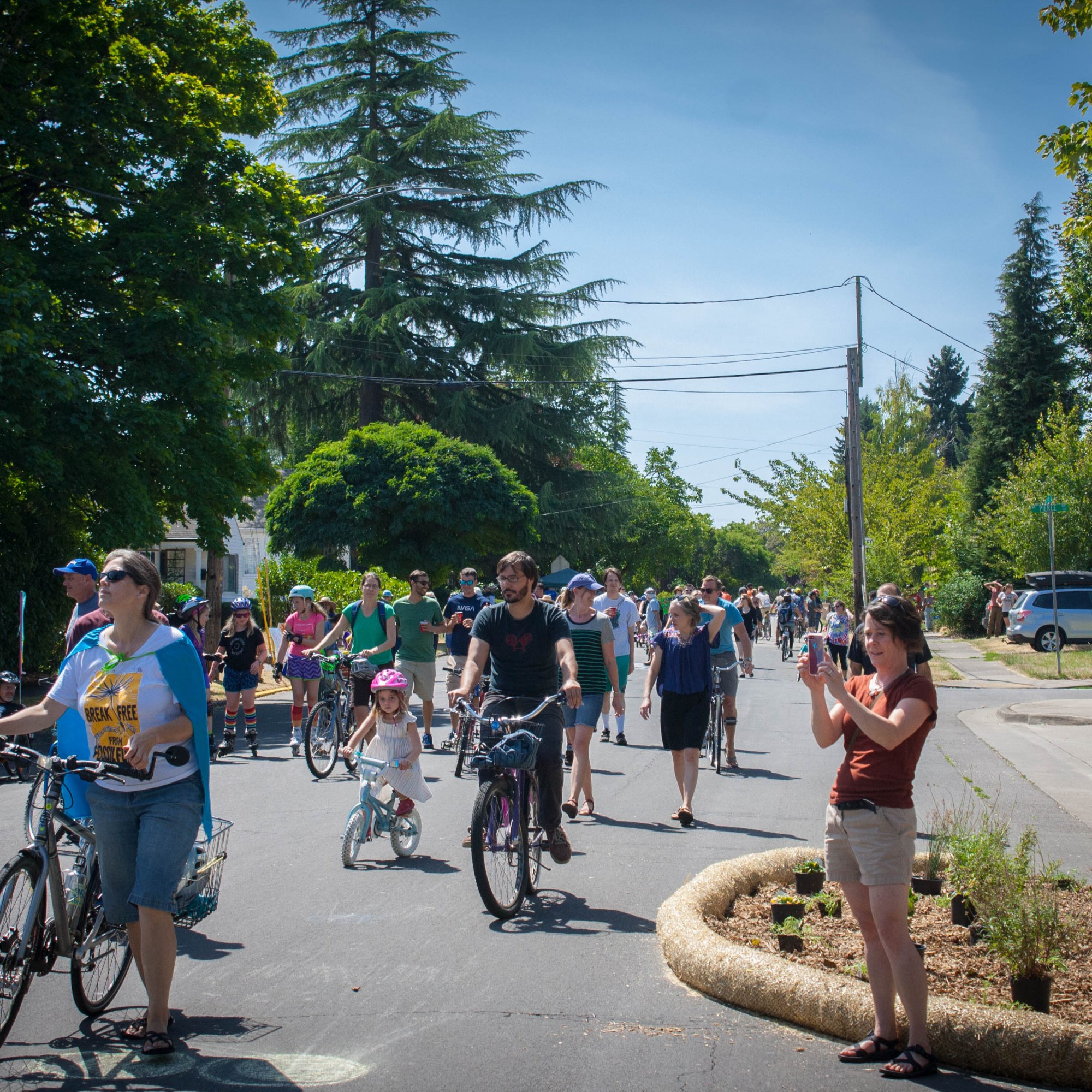
Placemaking is an experience and connection wrapped in a memory. These projects are tangible proof that people-power can reinvigorate a shared space to grow a healthy and vibrant community.
 Open Streets Corvallis